How on-site generation can buy a grid connection under congestion
July 2026 · 4 min read

A new way to earn a connection
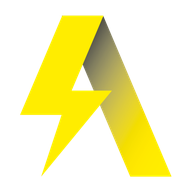
Grid congestion is no longer just delaying projects in the Netherlands. It is reshaping how they are engineered. In the province of Utrecht, grid operator Stedin forecasts a shortfall of up to 250 MW from 2026. Against that backdrop, a striking mechanism is moving from theory into built projects: developers securing grid-connection priority by installing their own generation.
The clearest recent example, reported by NOS, is the redevelopment of the former Rabobank headquarters in Utrecht, De Nieuwe Tuin. Rather than wait years for reinforcement, the project earns its place on the grid by helping to keep that grid stable at the moments it is under stress.
How the mechanism actually works
It is worth understanding the steps, because the details are where projects succeed or fail. First, the developer installs gas-engine gensets, not turbines, at its own cost. In the De Nieuwe Tuin case, two units sit in the basement of the building. Second, the units are dispatched remotely by the grid operator, Stedin, and are expected to run only a handful of days per year, during winter peaks. Third, in return, congestion-management rules allow the grid operator to grant the project connection priority. The generation is not there to power the building day to day. It is there to relieve the grid at the few moments that matter, so the building can be connected at all.
This is not a fringe experiment. Stedin and TenneT have contracted their own 60 MW fleet in parallel, made up of 24 Rolls-Royce mtu gas gensets (six bundles of 10 MW) operated by Flexpowernet, to keep the Utrecht grid stable from the 2026 winter while reinforcement catches up.
Our take: it is not for everyone
On-site dispatchable generation is a powerful instrument, but it is not a universal answer, and pretending otherwise does clients no favours. Our honest assessment: the economics really only pencil out from roughly 2 MW of connection demand upward; it works best in the 5 to 20 MW range, meaning industrial sites, large campuses and mixed-use redevelopments; and below 1 MW, batteries, non-firm (time-bound) connection agreements, or straightforward load management are usually the better, cheaper and cleaner instruments.
In other words, installing a genset is the right answer for a specific band of projects and the wrong answer for many others. Choosing correctly requires looking at your actual load profile, your peak coincidence, your sector duty cycle and your timeline, not reaching for the solution that made the news.
Why the engineering decides the outcome
Here is the part that gets lost in the headlines. A congestion softener is only as good as the electrical engineering behind it. The moment you put your own generation next to the public grid and let a grid operator dispatch it remotely, you are no longer just a consumer. You are running a small power plant that has to behave impeccably at the interface. For every project of this kind, the E&I&A scope is decisive: MV grid integration, connecting your installation to the medium-voltage network correctly and safely; generator protection and synchronisation, so units start, sync to the grid and trip exactly as they must, without endangering the network or your own plant; the DSO dispatch interface (RTU and telecontrol), the link that lets the grid operator actually call on your capacity when it needs it, reliably and securely; and SCADA and gas safeguarding, the monitoring, control and safety layer around gas-fired equipment inside a building.
Get any of these wrong and the project either does not get its connection priority, or gets it and cannot deliver on the obligation behind it. Get them right and the mechanism does exactly what it promises. It turns a no-capacity answer into a working, connected, compliant site.
This is the same discipline we bring to every congestion project, whether the answer turns out to be dispatchable generation, storage, flexibility, or a combination. Understand how the asset behaves in time, model every real constraint honestly, and engineer the interface so nothing is left to chance and no available capacity is wasted.
The right question to ask
If your project is on a connection waiting list, the useful question is not whether you should install a genset. It is: given my real load profile and timeline, what combination of dispatchable generation, storage and flexibility earns me a connection, and can I engineer it to the standard the grid operator will accept? That is exactly where we work. Bring us the site and the constraint, and we will tell you honestly what fits.
Afspraak is afspraak. A deal is a deal. We deliver what we promise.
Share
Related insights
March 2026
Choosing between SCADA and EMS for Dutch distribution operators
Where SCADA ends and EMS begins for DSOs — a practical decision framework for Dutch distribution operators planning their next control-room upgrade.
Read more
February 2026
Arc-flash studies on brownfield MV substations: scope traps and how to avoid them
What gets missed in arc-flash scope on brownfield MV substations, and how to set up a study that survives contact with reality.
Read more
July 2026
Europe's electrification target meets the grid: why bridging is engineering
Brussels targets 46% electrification by 2040 while Dutch grids run on temporary gensets. It is not a contradiction, it is a transition. The constraint is transport capacity, and bridging it is engineering work: grid integration, protection, SCADA and EMS.
Read more